|
|
By Sustainable PF
If you're new here, you may want to subscribe to my RSS feed. Thanks for visiting! What do you feed your dog (or pets)? Have you ever wondered why your dog seems to get sick or suffer from various ailments, some more serious than others? Do you take your dog to the vet for issues other than regular check ups? Have you ever wondered why your dog poops so much or why the excrement is goop? Have you ever taken a close look at what is in your dog’s diet? Well, you should.
 Ideally, a dog should eat as a wolf does - a raw diet of mainly meat with a side of roughage (fruits and vegetables, offal, meat, eggs, or dairy foods). A raw diet however is not always practical for pet owners. You need to freeze individual packages of the food and there are hours of work to prepare it monthly. Ideally, a dog should eat as a wolf does - a raw diet of mainly meat with a side of roughage (fruits and vegetables, offal, meat, eggs, or dairy foods). A raw diet however is not always practical for pet owners. You need to freeze individual packages of the food and there are hours of work to prepare it monthly.
When we got our dog four years ago we initially went with cheap food from Costco. My boss at the time had just gotten two puppies and he had a membership at the box store. He told us about this cheap food and offered to pick us up supplies when we needed it. Being frugal, and given Mrs. SPF’s family dogs growing up always ate low grade food (this is my first dog), we accepted my bosses offer.
The Results? Not good! Our dog ate a lot of the food (fed as per the bag instructions). She also had very runny and overly frequent poops, which we did not expect. As we both work we had to crate her during the day and we were always fearful she may have an accident in her cage. After a few bags of this food we went into a local non-chain pet store and started discussing the food (Kirkland). The look on the owners face was enough for us to know we had erred, but then she started to tell us about the problems with the product (see below for the comparable food ingredients). She pointed us to another type of food and explained why the ingredients were superior. Her business monitors the ingredients in the foods they sell and she promised us that if a company changes their dietary composition of the food they would tell us. We’ve had to switch to our now 3rd type of food from this store (due to the “small guy” getting bought out by the big players who reduce costs by reducing quality), but this is great value added as we wouldn’t think to monitor the changes in the food on our own. She also pointed out that since this food had better ingredients we would be feeding less to our dog. At the time we knew the food cost more and she’d eat less but until now we’d never crunched the numbers.
Before number crunching you really need to take a look at the ingredient differences between the higher priced food we buy our dog (Holistic Blend Healthy Dog) and the generic Dog Chow brand.
Holistic Blend Healthy Dog
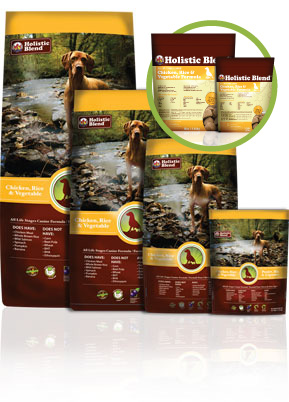 Cost: $46.99 - 35 lb bag. 100 lb dog requires about 3.5 cups per day. Cost: $46.99 - 35 lb bag. 100 lb dog requires about 3.5 cups per day.
Highlights
- Free range Chicken (Human Grade/No By-Products or Rendered Meats)
- Naturally Preserved (Rosemary)
- Holistic & Conventional Vet. Recommended
- Chelated minerals, whole grains, fruits, antioxidants and herbs
- Promotes healthy skin and coat
- Hypo-allergenic
- Highly digestible and palatable
- Balanced Omega 6 & 3 fatty acids (5-2 ratio)
- Ingredients allow for smaller feeding portions
INGREDIENTS:
Chicken meal, whole ground brown rice, hulless barley, chicken meat, oatmeal, chicken fat (preserved with mixed tocopherols, a source of vitamin E), potato, natural chicken flavour, sunflower oil (preserved with mixed tocopherols, a source of vitamin E), wild salmon meal, dried whole eggs, flax meal, yeast culture, dried kelp, tomato, carrots, pumpkin, cranberries, spinach, broccoli, green apple, blueberries, pears, bananas, rosemary extract, cinnamon, turmeric, capsicum, chamomile, dandelion, paprika. Minerals: calcium carbonate, zinc proteinate, ferrous sulfate, iron proteinate, zinc oxide, copper proteinate, copper sulfate, manganese proteinate, manganous oxide, calcium iodate, sodium selenite, choline chloride, l-lysine. Vitamins: vitamin A supplement, vitamin D3 supplement, vitamin E supplement, niacin, L-ascorbyl (source of vitamin C), inositol, d-calcium pantothenate, thiamine mononitrate, riboflavin, beta carotene, pyridoxine hydrochloride, folic acid, biotin, vitamin B12 supplement.
Does Not Have:
Animal By-Products (animal parts leftover after the meat has been stripped from the bone. Chicken byproducts include heads, feet, entrails, lungs, spleens, kidneys, brains, livers, stomachs, noses, blood, and intestines free of their contents. Very little nutritional value)
BHA/BHT (studies dating back to 1974 have shown that BHA and BHT increase the risk of cancer, accumulate in body tissue, cause liver enlargement, and can retard the rate of DNA synthesis and cell development.
Ethoxyquin (ethoxyquin is a pesticide, used in fruit scald control. It is also used as a rubber preservative!)
Antibiotics (can cause arthritis; ear infections; ‘doggy’ odor; dry, itchy skin; urinary tract infections; diabetes; environmental sensitivities; heart disease; cancer)
Growth Hormones (don’t really need to comment on this)
Corn (deprives your dog of the animal based protein that their bodies are better equipped to absorb and retain. Much of the corn protein will pass through your dog as poop.)
Wheat or Wheat Gluten (dogs can not digest it properly and it adds little nutritional value to your dog`s diet)
Sugar (can cause worms)
Salt (can lead to gulping of water, which leads to bloating, and the gas could lead to stomach twisting and a painful death)
Beet Pulp (slows down the transition of rancid animal fats and causing stress to kidney and liver in the process. Can cause allergies and ear infections)
Soya (soy proteins are digestible by dogs, the overwhelming problem is that many are allergic to it)
Now let’s look at Dog Chow
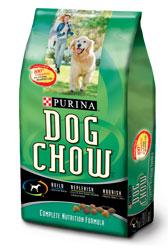 Cost: |30 for 35 lbs. 100 lb dog needs about 6 2/3 cups per day. Cost: |30 for 35 lbs. 100 lb dog needs about 6 2/3 cups per day.
Ingredients
Whole grain corn, poultry by-product meal, animal fat preserved with mixed-tocopherols (form of Vitamin E), corn gluten meal, meat and bone meal, brewers rice, soybean meal, barley, whole grain wheat, animal digest, calcium carbonate, salt, calcium phosphate, potassium chloride, L-Lysine monohydrochloride, choline chloride, zinc sulfate, Vitamin E supplement, zinc proteinate, ferrous sulfate, added color (Red 40, Yellow 5, Blue 2, Yellow 6), DL-Methionine, manganese sulfate, manganese proteinate, niacin, Vitamin A supplement, copper sulfate, calcium pantothenate, copper proteinate, garlic oil, pyridoxine hydrochloride, Vitamin B-12 supplement, thiamine mononitrate, Vitamin D-3 supplement, riboflavin supplement, calcium iodate, menadione sodium bisulfite complex (source of Vitamin K activity), folic acid, biotin, sodium selenite.
Not so good! Corn as the first ingredient - bad as it is filler. By-product meal as the #2 ingredient - bad (see above). Corn gluten meal at number 4 - bad - more filler. Meat and BONE meal - bad (see above - and it is listing BONE as an ingredient!). Brewers rice (bad as it is low grade rice - filler). Soybean meal (see above - filler). Barley (another grain - bad). Wheat (see above). Animal digest?! (a quick wikipedia search returns “A cooked-down broth made from specified or unspecified parts of animals (depending on the type of digest used). If the source is unspecified (e.g. “Animal” or “Poultry”, the animals used can be obtained from any source, so there is no control over quality or contamination. Any kind of animal can be included: “4-D animals” (dead, diseased, disabled, or dying prior to slaughter), goats, pigs, horses, rats, misc. roadkill, animals euthanized at shelters, restaurant and supermarket refuse.” OK - GROSS) and after these “ingredients” a whole slew of chemical type sounds words. Does your dog deserve this diet?
Now let’s take a look at the financial numbers.
1 cup of food = 1/2 lb
There are 70 cups of food in each bag.
Dog Chow costs $0.43 per 1/2 lb of food.
Holistic Blend Healthy Dog costs $0.67 per 1/2 lb of food.
The thing to note however, is that the quantity of food your dog eats changes the real cost that you pay per day.
Dog Chow recommends 6.66 cups per day @ $0.43 which equals $2.86 per day for Fido.
Holistic Blend Healthy Dog recommends 3.5 cups per day @ $0.67 which equals $2.35 per day! $0.51 less per day. Over a year you have effectively saved $186.15. Multiple this figure by your dog’s life expectancy (which should be longer with a good diet) and the savings are significant.
The numbers don’t lie and the ingredient list certainly opens ones eyes about the good or the bad for we opt to we give to our dogs. Given lower costs for higher priced food, the fact you will have to buy less bags (which become waste) of food and less trips to the pet store the choice seems simple. On top of all of these great reasons to feed your dog well? Vet bills! A healthy canine won’t be getting as many allergies and infections, not to mention (sometimes incurable) diseases. You won’t have to pay for pet insurance any longer or be forking out your hard earned money in very expensive pet bills. Treat your dog as you treat your money, with care, and you’ll both live happy lives.
Top 10 Diet & Weight Loss Myths Exposed What Are You Feeding Jake? Low Carb Dieting For Dummies By Katherine Chauncey
By Sustainable PF
Like many people out there I had not given our home and automobile insurance coverage a second thought. When I bought my first car I used a local brokerage that has a good reputation in town. Each year the policy would be renewed and I never looked for a better deal as I blindly and happily continued to “buy local” so to speak. When I bought my first house I called up the brokerage and had them cover my home insurance and I was happy to hear I got a discount on both the home and car insurance due to using the same company for coverage. My broker assured me that this was the best deal I could get and I believed the broker.
How wrong and silly was I. Naive even.
In the summer of 2010 we were moving to a new house and were buying our new Subaru Outback. I needed to make changes to our policies so once again I called up the broker to start the process of opening new policies on the new car and home and closing the old policies. Once again I was assured that Aviva (previously) Pilot was my best option. The first topic of discussion was our new car insurance. I was roughly quoted about $120 per month. Being a new car it seemed to make sense that I had been paying about $90 a month on our 8 year old car. The conversation then moved to our new house. This is where I learned a VERY valuable lesson. If they don’t ask, don’t tell! Why is this? We bought a 100 year old house that has a boiler furnace and the old style metal radiators. The pipes in the basement that carry the hot water are insulated with well wrapped asbestos (which when well wrapped and left undisturbed is harmless). Silly me, I told the broker this. She said she had to contact Aviva and would get back to me. Our home inspector had stated he saw no issue with the condition of the pipe wrapping so I wasn’t too concerned. A few days later the broker called me and told me that I could get coverage (for $108 a month) but I had to have the asbestos wrapping removed in 60 days or my insurance would be revoked. I was floored not to mentioned annoyed and perturbed at the thought I would need to shell out about $8000 to safely remove the wrappings.
This is when I decided to assess our insurance provider. The thought came to me that this brokerage must make money to survive. Were our monthly payments keeping them afloat? Most assuredly. I decided that I wasn’t overly happy with our new broker (the initial fellow was promoted and no longer managing our file) who worked part time and was very surly in her communications. So the time was right to hunt for the best rate. The first thing I realized is that I don’t need to pay for someone to be available for face-to-face discussions. I would always call or email the broker, so why pay their building lease and office costs too? I went over to the redflagdeals.com forums and discovered an insurance brokerage called TD Insurance Meloche Monnex which was getting great reviews for the cost of their insurance and their service. So I gave them a call. The rep was pleasant and worked to find us a good rate which included a discount for having both home and auto insurance through them. Check out the difference in price using an online/call centre service versus the local option.
| Local Brokerage |
home |
108 |
|
car |
120 |
|
Monthly |
228 |
|
Yearly Total |
2736 |
|
|
|
| TD Insurance |
home |
67 |
|
car |
94 |
|
Monthly |
161 |
|
Yearly Total |
1932 |
|
|
|
|
Monthly Difference |
67 |
|
Yearly Difference |
804 |
Wow! $804 a year?!? 29.4%. That is a significant savings.
I am now referring my family and friends to this TD service. My Dad made the switch and is reporting that their monthly insurance premiums (house, cars) were reduced from $331 to $208 or $1476 annually - a 37.1% saving (they have 2 vehicles). He is ecstatic and I am happy to have helped. I will tell my Mom about this soon as well. As our parents near retirement age and lower income they can use as much savings that they can discover and we’re happy to make them aware of our frugal discoveries. Some may ask whether or not abandoning our local brokerage is in line with our financial and lifestyle philosophy. We always prefer to buy local, when it makes financial sense. In this case, the local option is not sustainable for our personal finance.
Ten Easy Ways To Be More Green And Help The Environment. Finding & Using A Car Sharing Service Near You. The Dangers of Long Term and Interest Only Loans
By Sustainable PF
Our posts on our Subaru Outback selection and subsequent Import DIY posts have garnered a lot of attention in these early days of this site. I thought it best to start up a Question and Answer post where I will post some of the intriguing questions I have received from one reader. After the post we encourage other readers to post questions in the Comments to this post and I will answer all of them!
Update: Dec 8, 2010
I decided to follow up with Van Bortel regarding what J had told me about the $750 Canadian surcharge. The last thing I want to do is mis-lead the readers of this series. So I emailed Karl to get to the bottom of the surcharge details.
SPF asked: Hi Karl, I got word from a reader today that Van Bortel is now charging a $750 Canadian Export Surcharge. Can you confirm this? I want to educate my readers, not mis-lead them!
Karl responded: SPF, I’ve attached a document that explains the addition of the surcharge. One thing that’s not listed in the document is that if there is ANY issue with the export/import process post delivery that is created by myself or Van Bortel Subaru we will refund the $750 in full. (interesting to note the refund portion)
SPF asked: Thanks Karl - the reader I had been talking to also sent me the PDF.
I am curious Karl, how the figure of $750 was determined. Of course you don’t have to share, but from my research/knowledge on the subject these are the services I can see that you provide to CDN buyers:
1) a lot of hand holding / knowledge transfer (which may or may not be true for all buyers)
2) faxing paperwork to the border
3) in house service including that really handy map of the US Customs area.
Now, I think these services are important, and perhaps there are more included I am unaware of? (aside from the guarantee - it may be wise to include that bit …). But for $750, that is quite a chunk of change even given the justification on the VB pricing, ability to customize. If a buyer wanted an out-of-the-box on the lot model, and knew the process, they seem to be paying for some faxing work and the “guarantee” (which from my experience, everything @ the border is a breeze regardless of the manufacturer). If there is more to it, please let me know. We have been getting a TON of hits on my 5 article piece (linked below) and I want to ensure i’m not misleading anyone or negatively influencing people - just the facts. Our experience was great and i’m happy to give props where they are due, but if the $750 is for faxing I do need to put that out there to people.
Anyhow Karl - I don’t mean to come off in the wrong light - but I do want to present the straight up facts, including my experience to the readers. I still think importing from VB is a great deal. We saved 23% ($9300+) vs buying in Canada (had to make adjustments for the nav/moonroof but I got the numbers figured out). Even with $750 tacked on we would have saved $8614.47 or 20.8%!
Karl’s response: The figure was arrived at by the owner, Kitty Van Bortel. Somewhat off the record (SPF note: I did clarify a few times that Karl was ok with me quoting him here), here’s how it came about. You can paraphrase this however you’d like or publish in it’s entirety. Up to you.
It basically came to the point where there weren’t anywhere near enough cars to go around for customers, regardless of nationality. Because of our pricing structure we’re as much as $700 UNDER our factory invoice on a new Subaru. Subaru’s holdback is anywhere between $800 and $1,300. We rely heavily on “back end profit” to make up for our deeply discounted prices. This would be profit generated by financing and leasing, which obviously we cannot extend to export buyers, as well as extended warranties, rust proofing, interior and exterior protection packages, maintenance programs, and wheel and tire protection just to name a few.
By and large, these are items and plans that the majority of Canadians don’t purchase. I don’t know why. I think fear has a lot to do with it, but I digress. Essentially the dealership was netting about $250 per Canadian sale. We simply could not afford to do business like that in the short term or the long term. We don’t ever see (the vast majority) of Canadian customers again for service or maintenance so there’s residual profit that’s up in smoke. The choices that were on the table were to either stop selling to Canadians all together or to charge a surcharge.
Various numbers were kicked around the table… everything from $0 to $1,000 or more. The final figure was chosen by Kitty and has been in effect since. It is completely non negotiable and, in my honest opinion, was a sound business decision. We are providing a complicated service to Canadian buyers and, unlike any other dealership that I know of, will stand behind that even after the sale. If there is ANY issue with the export/import process that was created by me or anyone else at Van Bortel Subaru, we will refund the surcharge.
I’ve looked at this from both sides of the table and have to say that I agree completely with Kitty’s decision. And, to be completely honest, a 20% savings on a new car is nothing to turn ones nose up at :) I hope this has shed some light on the subject and please let me know if you have any other questions.
~~~~~~~~~~~~~~~~
Update: Dec 6, 2010
J has returned with a number of new questions for me and some information I found disappointing.
J stated: Just contacted Van Bortel, looks like they are charging additional fee’s now when selling to Canadians.
$12.50 NYS Tire Tax
$12.50 NYS In Transit Permit (30 day temporary license plate)
$10.00 NYS Inspection
$75.00 NYS Title
————-
$110 NYS Fees
Answer: I forgot to add this in, thanks J.
J also adds: and an additional $750 dealership fee, so total of $860. I’ve attached the PDF for your reference. Did you get hit with this by anychance?
Answer: We did pay the $110, but the $750 is news to me! Wow - can’t say I like that $750 charge AT ALL. For $750 they are basically only faxing some papers to the border 72 hrs in advance. Check with Bill Rapp Superstore - they also sell to Canadians out of Syracuse. The issue then becomes some more driving to get there, and, the Thousand Island Bridge issue.
J asks: Also did you ask your cdn insurance to insure the car when you drove it to back to Ontario? Since I’m assuming the NYS in Transit permit is only for the US.
Answer: We got our insurance before picking up the car.
J asks: One more quick question, Karl from Van bortel mentioned that there is no additional modification needed for the forester 2011, however RIV says something about Electronic Immobilization system need configuration or not meeting CMVSS114 requirements. When you brought over your outback, what modifications did you do?
Answer: The Outback required NO modifications whatsoever. Not too sure about the Forester. (upon further research I can’t find anything that confirms or denies J’s concern)
~~~~~~
J asked: Hi, love the blogs. Was reading up on your experience in purchasing the Subaru Outback. My wife and I are in a similar boat and are looking to purchase a 2011 Tribeca with the Van Bortel team in the US.
I have some questions though with your purchasing experience with them.. 1. Was there any negotiating room on the price with them or is it what you see on the website, 2. how much did it cost you to change the odometer and where did you get that done?
Answer: Hi J,
Our situation was a bit odd. Initially we were slated to get a 2010 Outback but it was getting very hard to get the customization for the model (Limited) we wanted around June when the news of the 2011 model release was announced. Karl @ Van Bortel pushed us toward the ’11 citing retail value, availability etc. The ’11s were $300 more than the ’10s. so he sold us the ’11 for the same 2010 quote - so just over 1% less than invoice. We didn’t try to negotiate further, though I suppose we could have tried. Buying at invoice was such a treat (compared to the haggling required in Canada) and Karl was so great (read: patient with me) we didn’t feel a need to hassle as we were saving $9500+ already.
So J, why the Tribeca? As far as I know it’s fuel economy is worse than the OB (Outback), and less storage capacity - but for a higher cost?
~~~~~~~~~~~~~~
J asked: Thanks for the quick response. The obvious choice is the OB. However not a fan of the wagon. The gas consumption is worrisome. Was thinking of getting the forester but there is the additional 6.1% duty, however its a lot better on gas.
My thought pattern is to get the tribeca since the cost saving is huge and sell it in 5-6 years, with the initial savings I’ve made + the low subaru depreciation value, I figure this will save me more money in the long run as opposed to the forester. I would love to get your thoughts on this?
Answer: The Outback is barely a “wagon” now - more of a CUV (Compact Utility Vehicle) with tons of cargo space. It rides as high as a Tribeca or Forester I think and has the best fuel consumption of the bunch.
The issue w/ selling in 5-6 yrs is that while you save on the purchase, there is still a stigma about imports. However, the warranty on any Subaru - Canadian or American, the warranty is gone after 5 yrs. But for some reason US cars just don’t sell for as much as Canadian counterparts, as silly as that is. As imports become more common this may change some … may not as well. I think the savings you get up front you will likely lose on resale. Check out autotrader.ca and check out 2010/11 models of the Subarus - you’ll see the pictures and notice the odometer reads MPH - and they’re used (barely) but are going for about $8-$10k less than the sticker value at sale. Hard to say really.
We bought our Outback expecting to keep it for 12-15 yrs (we don’t drive much more than 10k KM per year). We needed the cargo space for family and VERY big dog.
In the following example I compared the OB 3.6L engine as the Tribeca does not offer a 2.5L engine (which is what we bought). Our 2.5L rates as 22 mpg city and 29 mpg highway. For the record, I was correct on the fuel consumption, and the cost but not the total cargo capacity:
|
Outback |
Tribeca |
| MSRP: |
$30,995 |
$32,495 |
| Invoice: |
$29,024 |
$30,565 |
| Fuel Data: |
|
|
| EPA Estimated Fuel Economy - City (MPG): |
18 |
16 |
| EPA Estimated Fuel Economy - Hwy (MPG): |
25 |
21 |
| Fuel Tank Capacity, Approx (gal): |
18.5 |
16.9 |
| Total Cargo |
71.3 L |
74.4 L |
| with 3rd seat down: |
34.3 L |
37.5 L |
~~~~~
J asked: Looking at the outback and saw that the automatic transmission is CVT. From what I understand cvt transmission is one piece and cannot be repaired or fluid changed. What’s the outlook on that in the future when the OB warranty is gone? I hear the cost to replace down the road is near 8k and your only option is buy new cvt tran or find a used at a junkyard. Thoughts?
Answer: Haven’t looked that far into it. I do know I had a recall on it (re-programming) that went off without a hitch.
Follow up: From my research I found that the fluid can be changed, but your dealer will have to do the work and this will cost some money as you can’t DIY. I was unable to find any recent reports where CVTs could not be fixed. I would be very surprised that an automobile manufacturer would build an engine that could not be fixed. The only cost quotes I could see on CVT replacements were for early-mid 2000s Nissans.
~~~~~
J asked: Did you go back to the US to get it serviced or did you get it done in canada? If you did it in the US? Was that your only viable solution? I thought warranty is supported in Canada.
Answer: Recall work done in Canada. No issues, no hassles, didn’t pay a dime as it was a “recall” issue, not a warranty issue. The warranty is quasi supported in Canada. If you have a warranty issue you pay for the fix here then submit the receipt to SoA (Subaru of America) for reimbursement.
I would like to thank “J” a bunch for asking such poignant questions. I hope the readers following our Import experience find them useful. Again, feel free to comment with your questions and i’ll answer them to the best of my ability!
Has Our Costco Membership Been Worth it? 'Black Swan' Director Darren Aronofsky On Ballet, Natalie Portman And Lesbian Kisses Wilson Hope 12 Ball Ladies Golf Balls
By Sustainable PF
 As part of our ecoEnergy Retrofit we will replace all of the incandescent bulbs the previous owners had installed. Upgrading light bulbs is not covered by the ecoEnergy Retrofit program, however, we recognize that upgrading to compact fluorescent lights (CFL) or even LED (light-emitting diode) light bulbs will save us money. Our personal and financial philosophy dictates that we try to save money and leave a smaller carbon footprint whenever it makes sense to do so. When it comes to electricity usage we recognize there are many ways to reduce our bills and keep our money in our pockets while acting green. Seems like a no brainer to us. As part of our ecoEnergy Retrofit we will replace all of the incandescent bulbs the previous owners had installed. Upgrading light bulbs is not covered by the ecoEnergy Retrofit program, however, we recognize that upgrading to compact fluorescent lights (CFL) or even LED (light-emitting diode) light bulbs will save us money. Our personal and financial philosophy dictates that we try to save money and leave a smaller carbon footprint whenever it makes sense to do so. When it comes to electricity usage we recognize there are many ways to reduce our bills and keep our money in our pockets while acting green. Seems like a no brainer to us.
So why chose CFL lightbulbs? An ENERGY STAR Qualified Compact Fluorescent Light bulb (CFL):
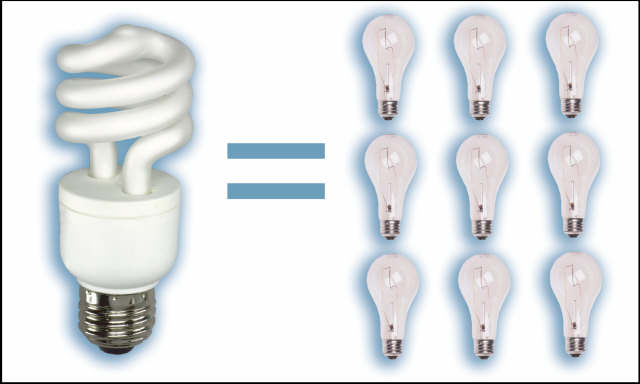
- The average rated life of a CFL is between 8 and 15 times that of incandescents. CFLs typically have a rated lifespan of between 6,000 and 15,000 hours, whereas incandescent lamps are usually manufactured to have a lifespan of 750 hours or 1,000 hours. You will buy less bulbs and produce less waste.
- can save more than $40 in electricity costs over its lifetime
- uses about 75% less energy than standard incandescent bulbs and lasts up to 10 times longer
- produces about 75% less heat, so it’s safer to operate and can cut energy costs associated with home cooling
From my research lighting accounts for between 9% and 15% of all residential electricity consumption. An average Canadian home has 30 light fixtures, indoors and out, that consume close to $200 of electricity every year. CFL lightbulbs use 75% less power and would then consume about $50 per year.
Using the conservative light span of 8 years for CFL lightbulbs we can continue the financial argument to using CFL bulbs by comparing the two types of bulbs directly.
|
13w CFL bulb |
60w Incandescent Bulb |
| Cost to Purchase 1 |
$1.50 |
$0.50 |
| Buy in Next 8 Yrs |
1 |
16 |
| Total Purchase Cost |
$1.50 |
$8.00 |
| Electricity Cost |
$400.00 |
$1,600.00 |
| Total Cost over 5YR |
$401.15 |
$1,608.00 |
Switching to CFLs will save you over $1200 over the next 8 years. From a financial perspective there is really no argument to not make the switch. If you dispose of the bulbs properly (recycle! but make sure you do it properly, most Blue Box programs don’t take them, but The Home Depot does), from a sustainability perspective you will produce much less waste than using traditional bulbs and far fewer bulbs will be produced which will reduce manufacturing waste.
| http://sustainablepersonalfinance.com/the-ecoenergy-retrofit-program/ |
The Benefits of using CFL Lighting Downsizing Compared to Upscaling in Retirement Living Cash Back: Saving Money or Incentive to Spend?
By Sustainable PF
In September 2010 we moved into our new (to us) 100 year old home. We felt it prudent to ask for average utility costs prior to buying and we were taken aback at the heating costs of our soon to be new home. I had done a retrofit on our last home (heating block was cracked in the 25 year old furnace so I wanted to get some money back, wanted to save money on heating and reduce our carbon foot print) and in 2009 our average heating bill was $96 per month (mainly due to a warm winter, as warm as it gets in Ontario in the winter that is). The previous owners of our new home spent $150 a month! We recognized we needed to do something about our heating costs and knowing that the ecoEnergy program was expiring March 31, 2011 we decided to get ours done as soon as possible.
We had the energy inspector come to our house and he fed the data he took into his model. Our house rated a 51 of a possible 100. It is a 100 year old house after all. For comparison sake, in 2011 Ontario building code has a minimum 80 rating for new builds. Our house had 6.4 air changes per hour whereas R-2000 new builds must have a maximum rating of 1.5. Many older homes are 8 to 10 times higher than the R-2000 standard, so our old house was actually sealed pretty well already. Interestingly, the inspector told us that unless we wanted to purchase and install an air exchanger on every floor of our house (we have a natural gas boiler - so no duct work), he would not suggest we partake in any sealing initiatives (caulking, foam inserts in outlets etc) and that insulating our house would be more than enough. The issue he told us was that a house that is too sealed and does not have any air exchangers, mold can become a problem. He suggested we simply crack a window periodically to get some cool air into the house. A few days after the inspection we received his report on what we can do to improve our energy efficiency.
We could upgrade our boiler furnace, but it is only 8 years old so that didn’t make a lot of sense. We passed on this. The windows in our house are all under 7 years old so we wouldn’t be doing this improvement either (the report did not suggest we do either project).
In July of 2010 we bought our home. We knew we were going to do the retrofit and that the city we live in will be metering water in 2011. The toilets (two) in the house are pretty low grade. A box store in town had a sale in July on American Standard low flow toilets so we bought two of them and stored them in the new house prior to our move. These toilets use 4.8 litres per flush whereas “normal” flow toilets use 6 litres per flush. Saving 20% more water, and money, per flush is a good idea. I have yet to install the toilets, but home to do so before Christmas. Costs: Regular Price: $538 + $69.94 HST = 607.94. Our sale cost: $336.74. Savings: $271.20. Retrofit rebate: $130 ($65 per toilet). Total Cost: $206.74 or 66%. Total savings on water usage, unknown.
The most logical way to reduce our heating costs is insulation. Up to 30-45% of the heat lost in a home comes from an uninsulated attic in the winter. Our attic is unfinished (for now) and has 6 inches of cellulose insulation blown into the floor. Not enough! The previous owners had taken the pink fibreglass insulation out of the roof rafters and left it on the floor. We decided to lay it on the floor and found we had gained 6 inches of insulation over about 40% of the attic floor. Knowing we could get $250 in rebates by adding 6 inches of insulation to the attic we decided it was worth buying more. A Canadian box store was selling the insulation for just under $31 for a bag of insulation so I measured the remaining floor space and determined we needed 10 bags to finish the job. The box store had an offer where if you spent $150 on insulation you could mail in for a $25 gift card. So I made two trips so I would get $50 in gift cards, which we will use on other projects in our home. Costs: Insulation $31 x 10 = $310. Rebate $250. Gift Cards $50. Total cost to get our attic RSI value to 7: $10 or 97%. Heat savings, unknown, but that insulation will have paid for itself before winter is done.
Thanks to MDG for his research into heat loss from a basement. 25%-30% heat loss is a lot! We had a choice to have our basement insulated to R20 or R40. We ultimately chose R20 as that is the current building code recommendation. We used soy-based polyurethane foam insulation in the basement headers and on the walls. Costs: $3013.71. Retrofit Rebate: $750. Total Cost: $2263.71 or 75%.
We weren’t done yet! Exterior walls can allow up to 50% of your heat to escape. We had our exterior walls insulated with an environmentally friendly product called airKrete. This product is completely non-toxic, CFC and urea-formaldehyde/ formaldehyde- free and 100% fireproof. Although this product is more expensive than blown in cellulose we chose it for a number of reasons. First, cellulose compacts over time, usually 10-15 years. Why do I bring this up? A few reasons. One we’d have to pay to have the work done again. Another, when insulation is blown into exterior walls many small holes are drilled into the walls and then roughly mudded. This means the home owner has the unenviable task of sanding, cleaning up and re-painting the house. The second reason we chose airKrete is that is an expanding foam that will reach all the nooks and crannies of our old house. Lastly, airKrete has an R value of 16 which bests the 14 R value of cellulose. The contractor who installed the airKrete told us all his customers gain the rebate of $190 by improving the air tightness of their house by 10 percent. For us, this means achieving an air change rate per hour of 5.76 at a pressure of 50 Pa. Cost of Insulation: $6203.70. Retrofit Rebates: $2065. Total Costs: $4138.7 or 67%.
In the end our total bill for our retrofit was: $10135.35. Total Retrofit Rebates: $3195. Total Cost: $6940.70 or 68.5%!
We walk or bike to work, like to shop locally. We used two local non-chain companies for the majority of our retrofit cash outputs into our community. We’ve now balanced (and exceeded) our recent non-local purchase versus the alternatives we have here in Canada. One area Canadians can see big savings on monthly bills and doing the right thing for the environment is to reduce home energy usage waste. There are but a few short months left for Ontarians to get their energy audit done, get the improvements done and the re-test. If you care for the environment, want to save money over time and want to lower that oil/gas bill, do the Retrofit.
Seven Powerful Steps That You Can Use To Save $14,341 in The Next 6 Months Average Annual Home Maintenance Cost 10 Tips to Save Money Around the Home
By Sustainable PF
The ecoEnergy Retrofit Program is (was) a fantastic idea where the Federal and Ontario governments would provide up to $5000 to homeowners who was to make their homes more energy efficient. I say “was” as the Tory government suspended its involvement in March 2010 a full year prior to the planned end of the program (March 31, 2011). Ontario will also end its involvement in the program as scheduled. The program essentially gives rebates to home owners who make their home more energy efficient depending on the things the home owners decide to improve.
There is still time for you to do your own retrofit and its pretty easy to do. First you need to contact a certified energy inspector. The inspection takes about 90 minutes and costs between $300-$350 + HST (Ontario). The government will reimburse you $150 after the test is done. The inspector will provide you with a report that tells you what your current energy rating is. The report also tells you the different improvements you can make with a corresponding rebate you will get for each improvement. You then choose which improvements to make and get them done. You contact the inspector a second time for the follow up test. This costs $150 and you are provided with a new efficiency rating. The inspector then submits your application for the rebates the government will provide.
Some of the upgrades you can make include adding insulation to your walls, basement and attic, replacing your old inefficient furnace with a high efficiency model or even a geo-thermal system, reduce the air/heat loss of your home, replace old windows and/or doors with new ones, install low flow toilets, upgrade your wood stove, upgrade you air conditioner with a hi-eff model and replace your hot water heater with an EnergyStar model.
In Ontario we can still get $5000 worth of rebates on these project which really help off set the costs. When the Feds were matching the $5000 amount many of these improvements were paid for entirely. Unfortunately the program was so wildly popular that the $220 million the Feds set aside for the program ran out. In these tough economic times, and the Progressive Conservative record on green policy, no more funds were added to the program.
Check out our analysis on the improvements we decided to make.
Home Improvement Grants for Senior Citizens Choosing a Home Improvement Project Using Home Improvement Centers Effectively
By Sustainable PF
This series of posts outlines how we saved $9364.47 buying a 2011 Subaru Outback Limited in the United States as a vehicle import. The following is the purchase details of our purchase.
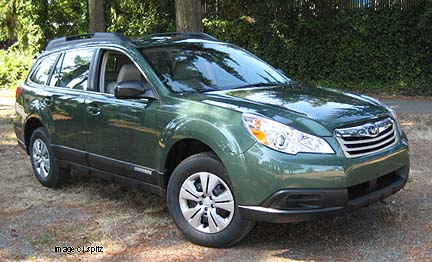
Here are the numbers:
Total Cost: $27,293
invoice (MSRP in brackets)
$26270 invoice for car ($27995)
$695 destination fee
$309 for PZEV
-$300 Van Bortel discount
$110 NY State Fees
$52 - rear bumper cover ($80)
$84 - splash guards ($129)
$34 - rear cargo net ($52)
$39 - all weather mats ($69)
Assessed price (in CDN for taxation purposes - assessed at customs): $28,288
$1,514.42 GST + AC tax
$2273.05 PST
$220.35 RIV
USD Exchange hit: $1,037.89
Exchange Rate: 1.0380
Toll CDN: $7
Toll US: ~$10.00 CDN
Big Mac: $3.94 (lunch)
Dad’s gas: $29
Hyundai gas: $30
Vehicle Safety + Clean Air Test: $132.21
Vehicle Registration: $0
SubTotal: 32,550.86
-$300 for 2010 price
TOTAL: 32,250.86 (give or take - exchange rate not included on these last discounts)
SUBARU.CA BUILD
$36,371.75 (MSRP + accessories)
TOTAL: 36,371.75 + 1725 destination
= 37896.75
HST: $4870.60 *** according to Subaru on line pricing
CDN + TAX: 42823.33
CDN Price = $42,823.33
CDN Adjusted* = $41,615.33 (less moon roof and navigation which are $1658 worth of options @ Van Bortel)
USD Price = $32,250.86
If we’d bought our USD back when we were at par we would have paid even less - at par, the total cost for this car would have been: $31,402,97
So we paid 77.5% of the CDN price.
(would have been 75.7% if we’d gotten our USD at parity)
Why does my elbow hurt when I serve in tennis? My Prosper Internal Rate of Return Update (End of Apr 07) = 3.57% for an Increase of 0.24% Twelve Reasons Why I Will Be Rich
By Sustainable PF
This series of posts outlines how we saved over $9300 buying a 2011 Subaru Outback Limited in the United States as a vehicle import. The following is the tale of the journey to make our purchase.
We arranged to pick the car up Monday, July 12th at 11am. Originally we were hoping to use the Thousand Islands bridge to export, but Karl at Van Bortel (the Subaru dealership) informed us that this port of entry has different rules than does the Lewiston Bridge near Buffalo. Basically, Thousand Islands requires the original title, signed, whereas the Lewiston Bridge only requires a faxed unsigned copy. Title does not get released until you pay for the car, so the only way to use the Thousand Island entry was to wait an additional 72 hours (and another trip!). Forget that! Same state, different rules. Peculiar.
My father had offered to help me get to NY to pick the car up. My wife has Dutch lineage, so we decided to drive to my Dad’s place to watch the Dutch play Spain in the World Cup final on Sunday the 11th. My wife doesn’t get vacation time where we work so I needed to either take a bus, plane or drive down w/ my father. I’m not in the Greater Toronto Area, so getting to a plane or bus was going to be a pain. My Dad had offered to drive 2+ hrs to my house, then the 6 hours or so to Buffalo, then 6 hours back to where I live, then 2 to his place. He just had his knee replaced 3 months ago, so I thought this was silly. So we headed to his place on the Sunday and my wife drove home after the soccer match. Holland losing was disappointing. Actually the entire final was a poor game to watch.
My father and I embarked on our adventure at 6:55am Monday morning. Quite the trip we were about to take as my dad drives a 1987 (yes, you read that right) Honda Civic (has about 120,000 km on it. It was my grandmothers old car). It was hot, as all of Ontario had been for a month. Our drive was uneventful. We paid a toll to cross the bridge, and it took about 10 minutes to get through the US border. My appointment at Van Bortel was at 11am and we arrived at 10:59am! Great timing. One note - NY State police don’t put up with speeding. We saw a half dozen pulled over cars - so watch your speed. 5-7 mph over won’t get you in trouble, but I wouldn’t risk more than that. Also, the I-90 is a toll highway, so I paid for the toll when we got off of it @ Victor NY. So remember to bring US funds! To buy food, gas, tolls. They don’t take a credit card at the toll booths. I forgot to get some and had to take an ATM exchange hit to make a withdrawal.
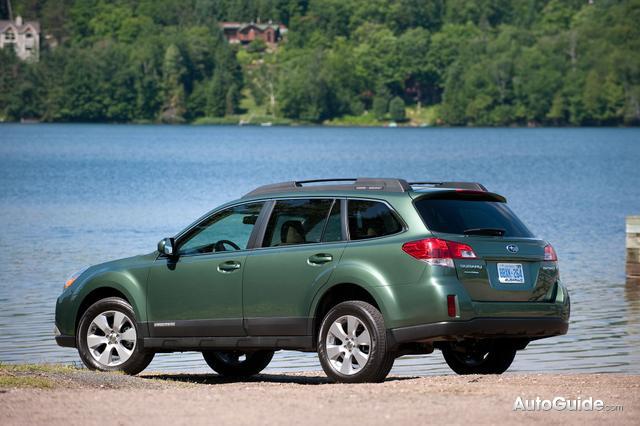
It took about 40 minutes to do the paperwork and take a look at the car. Everything was in order and the Van Bortel staff were awesome. They provided free drinks (water, pop, coffee) and snacks which were welcoming after a long drive. The staff provided the paperwork in organized groups - those I needed for my records and those for the import office. They also provided a map that had instructions on it for when I got to the US border (to do the export) which showed the customs area and which building I needed to get to. Very handy.
My Dad and I departed in our separate directions. I drove about an hour and was pretty hungry, so I pulled over at a rest stop and bought/downed a Big Mac, my first in years! I continued on and paid another toll when I got to the next exit/highway. It was an odd drive only in that I wasn’t used to the size of the Outback compared to my 2002 Hyundai Accent. There was a lot of construction, including on the bridges over Niagara, so the lanes were narrower than usual but I managed it. It’s just driving after all. I paid one more bridge toll getting back into Canada.
When I hit US Customs I used my handy maps from Van Bortel to get myself to the right building. In under 10 minutes I was on my way to the Canadian border. There were 3 cars ahead of mine trying to get processed, so it took about 7-8 minutes for my turn. It took about 10 minutes for the border agent to get information from me about the import. I’m not totally sure how many questions were required by Canada Border needs and how many were for his own informational purposes! He was impressed with my new Cyprus Green Outback though! After he was done checking my papers I drove to the Import office. It took me under 20 minutes to fill out the Form 1 and for the officer to process the paperwork. Another 5 minutes to pay for the A/C tax + GST.
I then drove home! I took the 407. We’ll see if the cameras were able to read the temp paper licence in the window. That will be an additional cost if they can. An OPP officer pulled up beside me and slowed - obviously checking the temp licence. I didn’t get pulled over, which was nice. So I kept driving to my home town. I got home around 5:45 pm.
The day after I brought the car home (a Tuesday) the mechanics who maintain my Accent offered to buy it from me for $2200, and they’d handle the safety, work that needed done (if any) and the emissions test. I was hoping to sell it for $2500 but that would include safety/emissions - and the potential of having to fix up things. So a good deal for us as far as we were concerned (and it covered our PST on the new car!). I also wouldn’t have to deal with showing the car, no shows and haggling. Lastly, I was able to transfer my old plates to the new car - so no need to buy more.
On the Tuesday I also downloaded my Form 2 from RIV. (if you give them your email you can forgo snail-mail and get a PDF version to print). Wednesday I took the car to Canadian Tire after dinner, but I was unable to get the inspection done on the spot - so I booked for Thursday after work to get the inspection done.
Friday I went to the MTO with all of my paper work and spent about 15 minutes registering our new Outback. This went smoothly and I went home and attached my old plates to our new car.
So that’s it! Easy as pie. One vacation day used, some extra expenses (gas, lunch, tolls, safety/emissions) but still, mega savings versus buying at our local dealership. We got the vehicle we had researched and decided upon and we couldn’t be happier.
Fisker Karma: Right Car, Wrong Price Stay Flexible and become a Virtual Agent at Home Personal Finance Equations You Should Know: the Leverage Ratios
By Sustainable PF
This series of posts outlines how we saved over $9300 buying a 2011 Subaru Outback Limited in the United States as a vehicle import. The following is the background of our purchase.
It was time for a new car. We own a beautiful 3 yr old giant breed dog (not depicted). Our 2002 4 door Hyundai Accent meant our 100+ lb dog took the (entire) back seat and our 300 litre trunk had to accommodate the rest of our storage. Our hunt started in Dec 2009. We almost bought a used 2006 Ford Focus wagon via private sale. Decided against that and started looking at new cars. I asked around on RFD in the Automotive forum. I analyzed quite a few wagons and CUVs. We came close to paying for a 2WD CR-V EX (for about $32,000), and then I decided to read the19,000 + post thread on importing cars from the United States - as suggested by some people who posted in my CUV thread. The prospect of buying a loaded US Outback for about the same price as a base Canadian Outback is a hoping to become financially savvy Canadian’s dream.
We wanted an Outback, but the base model at our local dealership was going to cost us ~$32,000. The Limited was a whopping $42,000. Given we live in a smaller centre there was little room to negotiate even though I had obtained the Canadian invoice price. I do hate the freight + delivery here in Canada - total dealership cash grab as far as I am concerned. Yes, I paid delivery in the US, but it was about 50% of what we would have to pay in Canada.
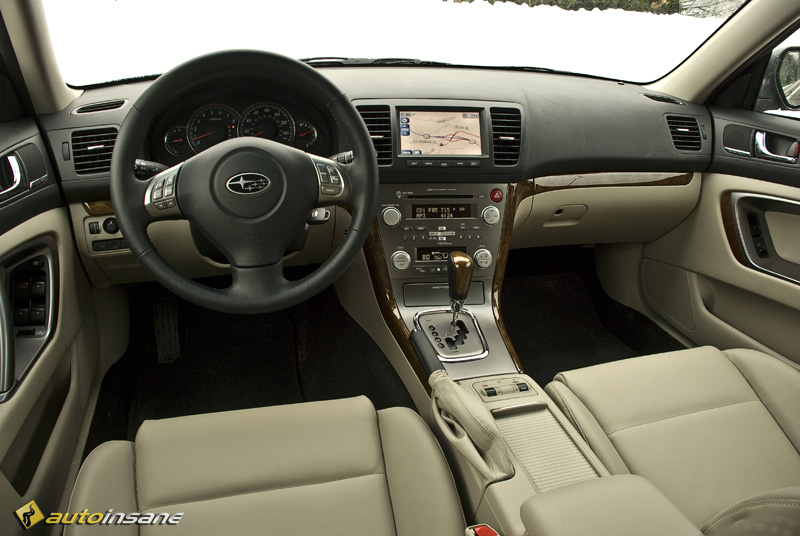 We wanted the Limited model. We didn’t want a moon roof or NAV. Those cost about $1658 in the US as options. In Canada they are included in the Limited and the buyer has no choice in the matter. The standard front under guard, wood trim, and leather are nice but we didn’t care about them much. The Harmon Karmon stereo is vastly superior to the stock stereo on other models. We also wanted the power passenger side seats, which are not available w/ the Premium or Base models. Most importantly, we wanted the dual zone temperature/climate feature as Mrs. Sustainable PF and I differ when it comes to heat and air conditioning temperatures. We also orders mud flaps, rear bumper protector, rear cargo net, We wanted the Limited model. We didn’t want a moon roof or NAV. Those cost about $1658 in the US as options. In Canada they are included in the Limited and the buyer has no choice in the matter. The standard front under guard, wood trim, and leather are nice but we didn’t care about them much. The Harmon Karmon stereo is vastly superior to the stock stereo on other models. We also wanted the power passenger side seats, which are not available w/ the Premium or Base models. Most importantly, we wanted the dual zone temperature/climate feature as Mrs. Sustainable PF and I differ when it comes to heat and air conditioning temperatures. We also orders mud flaps, rear bumper protector, rear cargo net,
I emailed Karl @ VanBortel a slew of times. He was great. I highly recommend working your deal via Karl @ VanBortel if you can get to NW NY State to buy your car (in Victor which is pretty much the midpoint between Syracuse and Buffalo). Also, they sell for invoice – always - and they clearly state the difference between the invoice price you will get versus the manufacturer MSRP. You might be able to get a lower rate from Van Bortel, but I was content with invoice (on the car and accessories).
I started doing the math. I figured I could get this car for $31,000 if I got my CDN-USD foreign exchange at par. We didn’t get it at par, we paid a bit more, but we did pick the right time as the Loonie was stronger when we purchased then it ended up being for the following months.
We were slated to get a 2010 Outback, but those got increasingly difficult to order (our first request was not met for the May 1 delivery). Karl suggested we get a 2011 instead. Might have to wait a bit longer, but it’s a newer vehicle. Our order was placed when Subaru of America announced the production start date (mid June I think). We then learned our order had been filled. Karl also honoured the 2010 quote he gave me on both the car and accessories. The 2011 is about $300 more. He also gave me accessories at the Premium price, not Limited prices as for some reason they differ.
Opinion: $15,000 Homebuyer Tax Credit is Too Good to be True Its Been Awhile since I've Posted (Sorry for the long Post) My First Major Purchase
|
|




 I mentioned being a bit compulsive so I hope the reader can understand how much I research things when I become interested in them. I started my research by re-reading a copy of The Wealthy Barber by David Chilton that my Mother gave to me decades ago. I downed entire book one warm July day at Mrs. Sustainable PF’s parents house. I quickly realized I should have picked this book back up 10 years ago prior to entering the work force. Ten years of compounding interest, lost! I agree with all of Chilton’s suggestions regarding personal finance. Save 10% off the top, utilize government savings programs such as RRSPs and Tax Free Savings Accounts, ensure you are insured, contribute to your pension if you are lucky enough to have an employer who provides one (we do), participate in home ownership and get wills for both of us.
 I now subscribe to 65 RSS feeds pertaining to personal finance, investing and socially responsible finance. I did mention I get a bit obsessive compulsive, right? I started reading the Personal Finance sub-forum at redflagdeals.com but at the time I found there was far too much information and a lot of it contradictory. So I decided to look for other sites that were the opinions and experiences of individuals and/or collaborators. One of the first blogs I stumbled across was Frugal Trader’s Million Dollar Journey (MDG). Fantastic site as many who read this post likely already know. I then discovered the world of Exchange Traded Funds (ETF) and quickly surmised that my Mutual Fund days were at an end. Who wants to pay a ridiculously high Management Expense Ratio (MER) when products are available that a Do It Yourselfer can purchase? I found The Couch Potato investing strategy at MoneySense.ca and


